

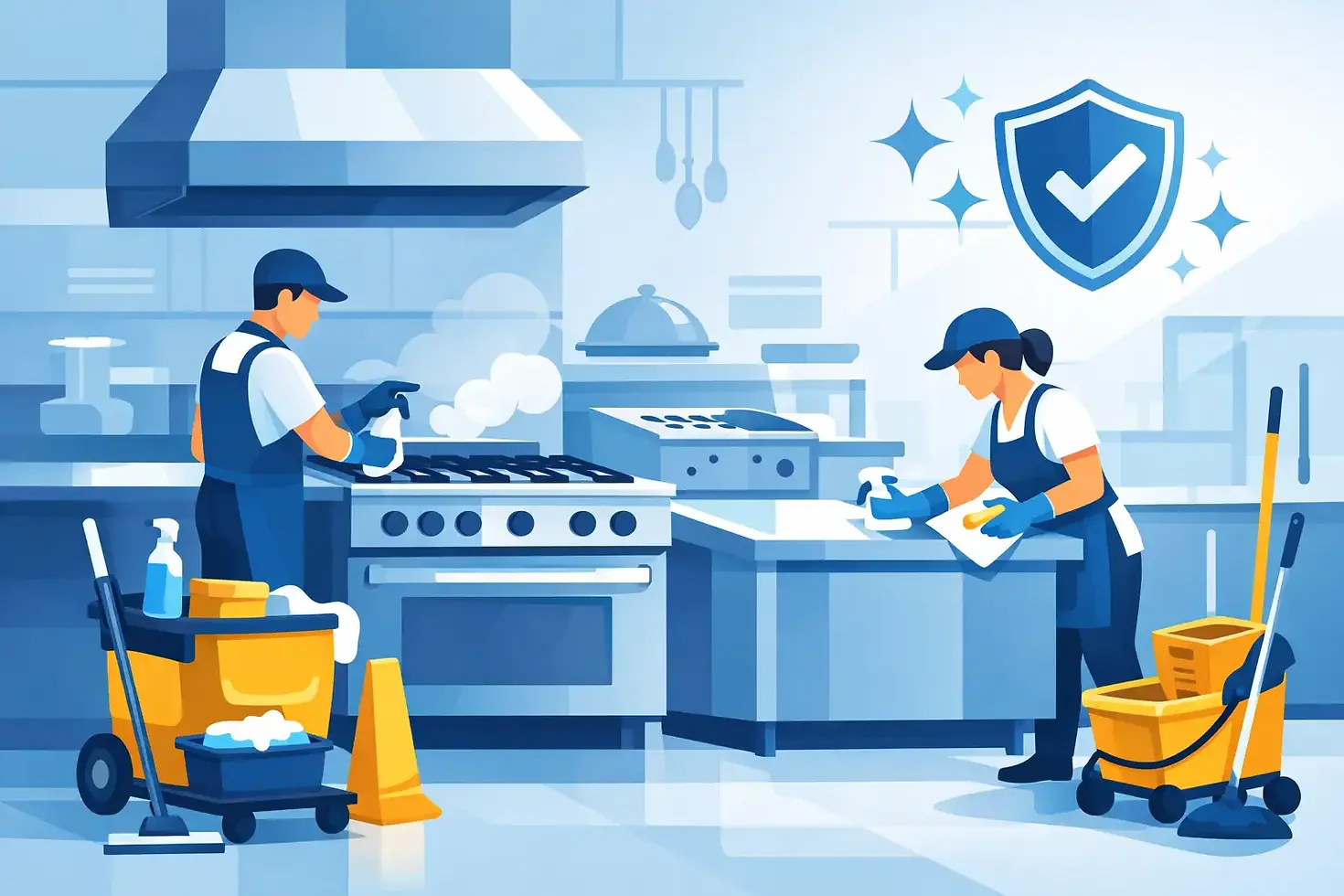
Commercial Kitchen Cleaning That Protects Service

A clean dining room can make a strong first impression, but the condition of the kitchen determines whether service can continue safely. Professional commercial kitchen cleaning addresses the grease, food residue, moisture, and high-touch contamination that build up behind the scenes - often in places staff do not have time to reach during a busy shift.
For restaurant owners, foodservice managers, and facility teams, the goal is more than a kitchen that looks clean at closing. It is a workspace that supports food safety, helps reduce fire risk, protects equipment, and stays ready for employees, customers, and inspections.
What Commercial Kitchen Cleaning Should Cover
Daily employee cleaning is essential, but it has limits. Line cooks and dish staff can wipe work surfaces, clean spills, empty trash, and maintain basic sanitation throughout service. Deep cleaning requires more time, specialized products, trained techniques, and attention to areas that are commonly missed during routine closing tasks.
A tailored commercial kitchen cleaning plan typically focuses on food preparation areas, cooking equipment exteriors, floors, walls, sinks, drains, storage areas, and high-touch surfaces. The exact scope depends on your kitchen layout, service volume, equipment type, and operating hours.
For example, a high-volume restaurant with fryers and grills may need frequent degreasing around the cook line and floor restoration near the hood area. A corporate cafeteria may place more emphasis on serving lines, dishwashing stations, refrigeration exteriors, and breakroom-adjacent surfaces. One schedule does not fit every operation.
Grease Control Around Cooking Areas
Grease is one of the most persistent challenges in a commercial kitchen. It settles on walls, backsplash areas, equipment exteriors, floors, and hard-to-reach spaces around cooking lines. Left in place, it can create slippery walking conditions, unpleasant odors, and a greater fire concern.
Professional cleaners use appropriate degreasers and methods for the surface being treated. Stainless steel, tile, sealed floors, and painted walls may each require a different approach. Using overly harsh products can damage finishes, while using a weak product or incomplete process simply moves the grease around instead of removing it.
Floors, Grout, and Drains
Kitchen floors absorb more wear than almost any other surface in a facility. Grease, dropped food, moisture, cleaning chemicals, and heavy foot traffic can leave floors dull, sticky, or stained. Grout lines and textured flooring can hold residue even when the surface appears clean at a glance.
Deep floor cleaning helps restore traction and presentation while removing buildup that daily mopping may leave behind. In some kitchens, tile and grout restoration may be the right solution when discoloration has become embedded. Drains also deserve close attention, since debris and residue around them can contribute to odors and poor sanitation conditions.
High-Touch and Food-Adjacent Surfaces
Door handles, refrigerator pulls, faucet controls, switches, shelving, carts, and equipment handles are touched repeatedly throughout the day. These areas need consistent cleaning and disinfection using products suited to commercial foodservice environments.
Cleaning and disinfecting are not the same task. Cleaning removes visible soil and residue; disinfecting is performed on a properly cleaned surface to help reduce germs. A professional crew understands the order of work, product dwell times, and the need to avoid cross-contamination between raw-food areas, dish stations, restrooms, and general facility spaces.
Why Deep Kitchen Cleaning Matters to Operations
A neglected kitchen does not stay hidden for long. Employees notice sticky floors, stained grout, grease-coated equipment, and lingering odors. Inspectors may notice them too. More importantly, these conditions can make a kitchen harder and less pleasant to work in during peak service.
Regular professional cleaning supports several practical business outcomes:
Safer walking surfaces and better control of grease buildup
A cleaner environment for food preparation and employee workstations
Improved appearance for open kitchens, catering facilities, and back-of-house tours
Better protection for floors, tile, equipment exteriors, and surrounding finishes
More confidence before inspections, special events, and busy seasonal periods
The right service also helps your internal team focus on food preparation and guest service rather than trying to complete labor-intensive detail work after a long shift.
Building a Cleaning Schedule That Fits Your Kitchen
The best schedule is based on risk, use, and visible conditions - not a generic calendar. A kitchen that prepares hundreds of meals each day will need more frequent deep cleaning than a small office breakroom kitchen. Facilities with extended hours may need cleaning completed overnight or during low-traffic periods so operations are not interrupted.
Start by separating daily responsibilities from periodic professional work. Employees should continue handling immediate spills, sanitizing food-contact surfaces, taking out waste, and following established closing procedures. A professional cleaning partner can take on the deeper work that requires extra labor, equipment, or specialized knowledge.
Weekly or biweekly service may make sense for high-use areas with heavy grease and traffic. Monthly service can work for some lower-volume operations, while quarterly detail cleaning may help address walls, grout, storage areas, and neglected surfaces. If your floors still feel sticky after mopping or grease returns quickly around the cook line, the service frequency may need to increase.
Coordinate Cleaning With Other Maintenance Needs
Kitchen cleaning is most effective when it is part of a broader facility care plan. Floor care, tile and grout restoration, window cleaning, recurring janitorial service, and carpet cleaning in adjacent dining or office spaces all affect how customers and employees experience your property.
Working with one reliable provider can simplify scheduling and accountability. It also helps ensure that the crew understands your building, access procedures, security requirements, and preferred service times. Janitorial Source LLC develops customized cleaning plans so commercial clients can maintain consistent standards without adding unnecessary disruption to their operations.
What to Expect From a Professional Cleaning Crew
A dependable cleaning provider should arrive prepared, work according to the agreed scope, and communicate clearly about what was completed. Before service begins, the crew should understand your operating schedule, areas of concern, required access, and any surfaces or equipment that need special care.
During the cleaning process, trained professionals should use commercial-grade tools and appropriate products for grease, soil, and sanitation needs. Eco-friendly products can be a valuable option when they are selected for both performance and facility requirements. The priority is not simply a pleasant scent - it is a clean result that supports a healthier, more professional environment.
After service, the kitchen should look visibly improved, feel cleaner underfoot, and be ready for staff to resume work. For recurring service, consistent documentation and feedback are valuable. If a particular area needs added attention, such as a fryer wall, a floor drain, or stained grout near the dish area, the plan should be adjusted rather than ignored.
Signs Your Kitchen Needs Professional Attention
Some problems are easy to see: darkened grout, grease on wall surfaces, residue around equipment bases, and floors that look dull even after mopping. Other signs are more subtle, including recurring odors, slippery areas, pest concerns, or employees spending too much time trying to clean the same buildup.
Do not wait until an inspection, complaint, or equipment issue forces the decision. A planned commercial kitchen cleaning schedule gives you greater control over cost, timing, and results. It also helps preserve the clean, capable image your business works hard to deliver.
A well-maintained kitchen lets your team begin each shift with fewer distractions and more confidence. When the back of house is clean, safe, and professionally cared for, it supports the service your customers remember.


Comments